A metal roof is more than a finish on a house, it is an investment that pays back through longevity, energy savings, and reduced maintenance headaches. In Los Angeles, where sun, coastal humidity, and occasional wind-driven debris combine, a metal roof behaves differently from the same product in Denver or Chicago. I have worked on dozens of residential and light commercial metal roofs around the city, from Hollywood bungalows to multiunit buildings near the port. This guide captures practical routines, real-world judgment calls, and the maintenance decisions a homeowner should make to keep a metal roof performing for decades.
Why this matters A properly maintained metal roof can exceed 40 years of useful life. Neglect cuts that number dramatically. Small issues that are easy to catch and fix — loose fasteners, clogged gutters, failing sealant — become leaks, rot, and expensive underlayment replacement if left to worsen. For property owners in Los Angeles, maintenance keeps interiors dry, curb appeal high, and energy bills lower during long, hot summers.
How metal roofs behave in los angeles climate Los Angeles is not a single climate. Microclimates matter. A roof in Malibu faces salt spray and ultraviolet stress. A roof in the San Fernando Valley endures higher summer heat and more thermal cycling. Urban cores collect more heat at night, influencing thermal expansion and contraction. Metal expands and contracts more than asphalt shingles, and those movements concentrate stress at seams, fasteners, and penetrations.
Corrosion is a concern near the coast. Most residential metal roofs use coatings and metals that resist rust, but coastal humidity and airborne salts reduce the protective lifespan. Reflective finishes can mitigate heat gain, but if the finish chalks or flakes, the roof loses much of its solar performance.
Practical maintenance calendar A simple, repeatable schedule separates routine upkeep from emergency repairs. I recommend two predictable touchpoints every year, timed to local conditions. One inspection in late spring after the rainy season is ideal to confirm flashing and sealants held through winter storms. A second inspection in early fall catches summer UV and heat-related issues before winter and the December rains.
Some properties need a third check. If you live within a mile of the coast, add a winter check focused on corrosion and salt accumulation. If your property has lots of overhanging trees, include a monthly visual sweep during the wet season for debris.
Essential visual checks you can do from the ground You do not need to climb onto the roof for every inspection. Many early-warning signs appear at lower vantage points. Check gutters for granular buildup or metallic flakes, look for streaks or rust stains on fascia, and inspect interior ceilings for water staining after storms. At the roofline, pay attention to fasteners that look sunk or panels that appear wavy or separated. Addressing these signs early saves a contractor visit.
When to call a professional Hire a qualified Metal Roofing Contractor Los Angeles when you detect active leaks, extensive corrosion, or panel deformation. Also get professional help for work near skylights, chimneys, or HVAC curbs. Safety is a real concern. Roof slope, surface slipperiness, and fragile coatings make rooftop work riskier than it appears. A contractor brings fall protection, test equipment, and experience diagnosing leak pathways that do not follow a straight line from stain to source.
A five-step seasonal maintenance checklist Use this brief checklist as the backbone of your seasonal work. It covers the highest payoff actions that a homeowner or property manager can either perform safely or verify when a pro visits.
Clear gutters and downspouts, flush with water to confirm drainage Remove loose debris from valleys and flat transitions, do not drag abrasive tools across the metal Inspect fasteners and sealants at penetrations, reseal if you find gaps or brittle caulk Check visible flashings and trim for separation; tighten or refasten clips that have shifted Look for coating damage or corrosion spots, mark and photograph them for monitoringCleaning and what to avoid Cleaning a metal roof is not an aesthetic indulgence, it is functional care. Light dust and pollen blow off with rain, but pollen can accumulate in gutters and at seams. For routine cleaning, soft brushes, low-pressure rinses, and mild detergents preserve roof finishes. I recommend avoiding pressure washers above 500 psi. High pressure strips factory-applied coatings and drives moisture into seams. Never use abrasive pads or wire brushes on painted coatings; those tools remove protective layers and accelerate corrosion.
For oil stains or organic build-up, use a solution of water and non-ionic detergent. Rinse thoroughly. If you must remove rust stains, use a product designed for metal roofing and follow manufacturer directions. Test any cleaning chemistry on a small hidden area first.
Fasteners, clips, and their lifecycles Screws and clips deserve attention because they are where movement concentrates. Modern standing-seam systems often use concealed clips that allow thermal movement while avoiding exposed fasteners. Older retrofit metal roofs and through-fastened panels use screws with neoprene washers. Those washers age with UV and compress with thermal cycling. Expect neoprene washers to show material change in 12 to 25 years depending on exposure and product quality.
When you find loose screws, do not overtighten. Overtightening crushes the washer and reduces its sealing capability. Tighten until the washer is snug and slightly compressed, not flattened. Replace any fastener that wobbles or whose washer looks cracked. In coastal locations, stainless steel fasteners reduce corrosion risk. A Metal Roofing Contractor Los Angeles can evaluate whether a fastener retrofit makes sense for your roof.
Sealants, flashing, and leak pathways Sealants fail long before metal panels do. Common leak pathways are not always the obvious places. A failed seal at a vent stack flashing can send water along the underside of a panel, with stains appearing far down along a wall or ceiling. When re-caulking, use a high-quality, breathable sealant rated for metal and compatible with the paint system.
Flashings that were custom-formed on a job sometimes need re-tightening at screws and refastening at laps. If you find soldered flashings, expect different maintenance than mechanically fastened flashings. Soldered joints do not tolerate movement well and may crack after decades. A professional assessment is commercial metal roofing contractor Los Angeles worth the expense when a section shows repeated leaks despite resealing.
Coatings, paint, and when to recoat Factory coatings can last 20 to 30 years, but environmental stress shortens that span. Recoating is not cosmetic. It restores UV resistance, color, and the sacrificial layer that slows corrosion. Recoating starts with surface preparation: cleaning, removing loose material, and treating bare metal. The soundness of the substrate and the presence of corrosion determine whether recoating is a quick maintenance task or a more significant repair.
If you see more than isolated chalking and a few small corrosion spots, budget for professional surface prep and a thin-film recoat. That procedure can extend the roof life by a decade or more. For roofs in aggressive coastal atmospheres, consider repainting on a 8 to 15 year cadence rather than waiting decades.
Tree management and debris control Trees give shade and reduce cooling loads, but overhanging branches are relentless roof killers. Leaves accumulate in valleys. Twigs abrade finish during wind events. Birds and rodents find shelter under loose edges. Trim branches to clear the roofline by at least 6 feet where practical. On multiunit properties, a tree trimming schedule reduces the frequency of emergency cleanouts and prevents organic material from holding moisture against metal surfaces.
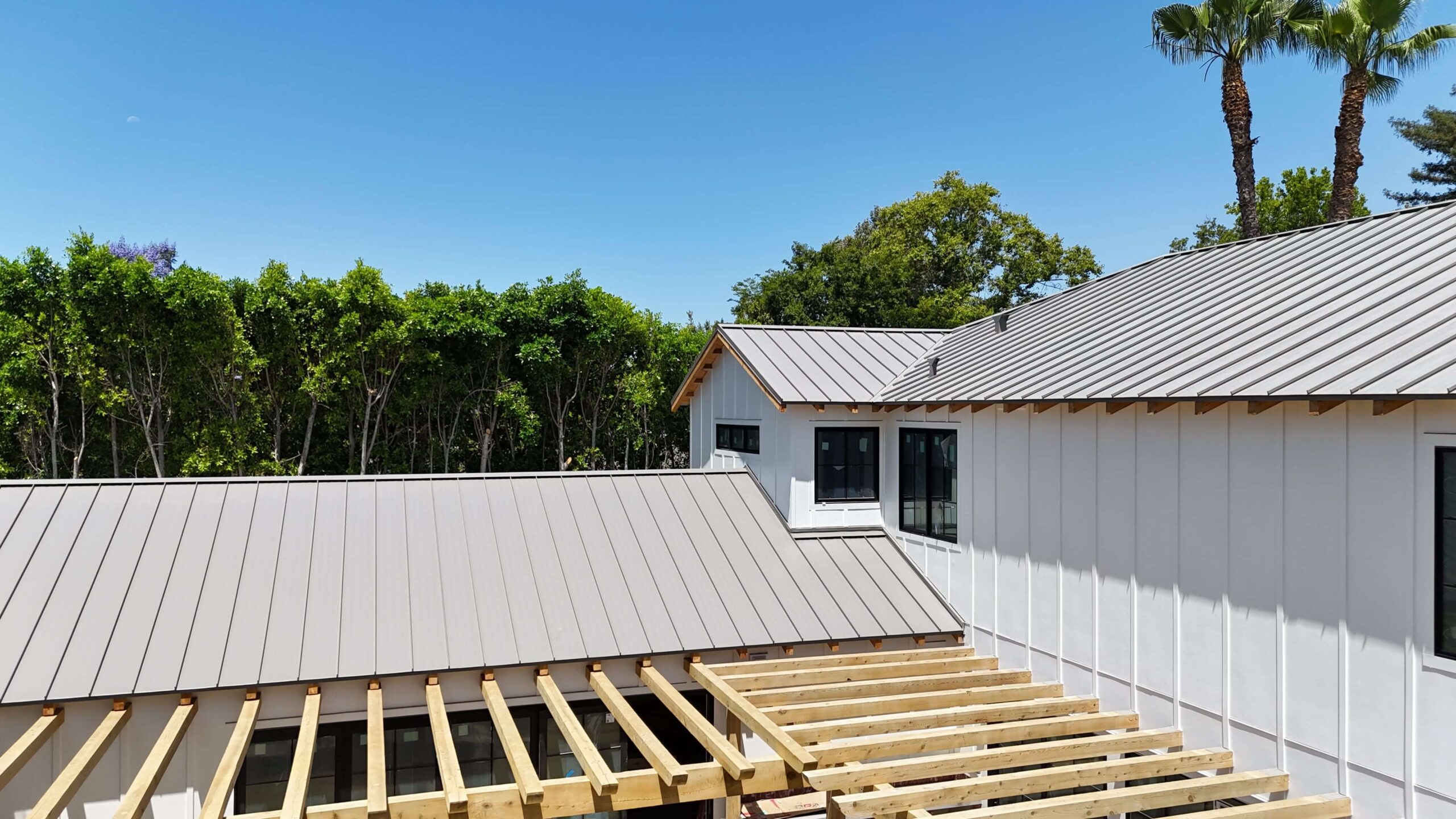
Gutter and drainage details that matter Gutters and downspouts do more than move water. They indicate how the roof is shedding water. When a gutter fills and overflows at a seam, the next storm will route moisture under flashings. Keep gutters securely fastened and checked for sagging that leads to standing water. Add leaf guards in heavy foliage areas, but inspect the guards annually. Guards can trap smaller debris that still fosters corrosion.
Thermal movement and panel alignment Thermal movement is the unseen stressor. Panels fixed too rigidly will rumple or buckle as the sun heats them. Conversely, panels attached with worn clips can shift excessively, exposing edges and leading to frayed seams. When a panel looks misaligned, do not assume it is a cosmetic issue. Misalignment often means clips or fasteners have failed or a previous repair was improperly executed. A Metal Roofing Contractor Los Angeles will check clip spacing and fastener torque to balance movement and hold.
How much will maintenance cost Costs vary widely based on roof size, accessibility, and condition. A basic annual inspection with minor maintenance such as gutter clearing and a few fastener replacements can be a few hundred dollars. Replacing large sections of flashings or re-coating the whole roof can run into the thousands. Expect a full roof recoating on a typical 2,000 square foot home to cost in the mid four figures, with coastal or steep roofs costing more. Budgeting for periodic maintenance reduces the probability of a major repair that costs an order of magnitude more.
Case study: a leak that looked like a ceiling stain but was a failed clip A tenant called about a small water stain near a second-story exterior wall after a heavy storm. The homeowner assumed a failed gutter. The inspection revealed water tracking two bays over from a loose concealed clip. A clip had corroded at its base and allowed lateral movement. Water seeped into the seam above a wall penetration, then ran along the underlayment and deposited the stain where it finally escaped. Repair involved replacing the clip, resealing the seam, and replacing a short length of underlayment. The repair cost was modest compared to removing and replacing an entire roof section that a later, less thorough contractor recommended before we inspected.
Choosing a contractor and what to ask When hiring a Metal Roofing Contractor Los Angeles, ask about experience with your roof type, examples of local projects, and warranty handling. Request written quotes that separate inspection, materials, and labor. Ask whether the contractor uses stainless fasteners near the coast, whether they provide a manufacturer-approved sealant, and how they handle existing finish compatibility during repairs.
A good contractor will document problem areas with photos, provide a prioritized repair list, and explain the trade-offs between immediate fixes and longer-term interventions. If a company pushes a full replacement without documented reasons, get a second opinion. Independently verify licensing and insurance, and prefer contractors who offer a roof-specific warranty on workmanship.
Final perspective on trade-offs Maintenance is a balance. You can aggressively preserve every inch with frequent pro visits and coatings, or you can accept higher risk and lower initial costs, planning replacement sooner. For most owners in Los Angeles, a middle path is best: two inspections per year, prompt minor repairs, and recoating when signs of finish degradation appear. That approach maximizes lifespan and keeps repair budgets predictable.
Eclipse Metal Roofing has years of local experience. If you need a professional assessment or emergency repairs, choose a contractor who understands Los Angeles microclimates, metal-specific materials, and the negotiation between thermal movement and secure attachment. Proper maintenance keeps metal roofs performing as designed, saving money and preventing the kind of surprise failures that turn a single rainy season into a major expense.
Eclipse Metal Roofing
2140 Westwood Blvd Unit 209, Los Angeles, CA 90025
+1 (310) 490- 9695
[email protected]
Website: https://eclipsemetalroofing.com